

Today’s Children Need Shaktimaan More Than Ever: Mukesh Khanna

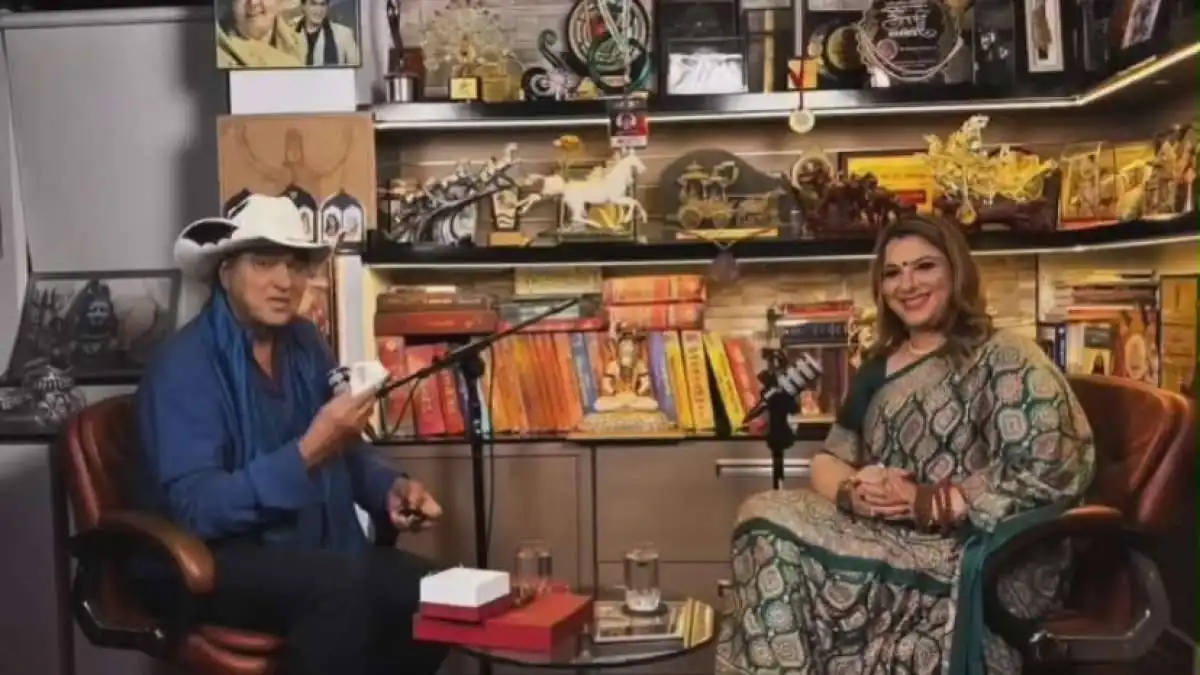
Veteran actor Mukesh Khanna expresses concern over today’s fast-paced generation and the need for strong cultural heroes like Shaktimaan and Bhishma Pitamah in an insightful conversation with astrologer Geetu Parmar.

admin
admin Chief Editor
Jul 10, 2026 • 3:27 PM  0  0
E
Entertainment
NEWS CARD
Logo
Today’s Children Need Shaktimaan More Than Ever: Mukesh Khanna
“Today’s Children Need Shaktimaan More Than Ever: Mukesh Khanna”

Favicon
Read more on en.gujarathorizon.com/s/9bf871
10 Jul 2026
https://en.gujarathorizon.com/s/9bf871
Copied
Today’s Children Need Shaktimaan More Than Ever: Mukesh Khanna

Mumbai, July 10, 2026 — Veteran actor Mukesh Khanna, forever etched in public memory as both Shaktimaan and Bhishma Pitamah, recently engaged in a thoughtful conversation with astrologer and psychic Geetu Parmar. The discussion traversed themes of television’s cultural influence, the spiritual state of Indian society, and the challenges facing today’s younger generation.
When asked whether contemporary heroes effectively guide children, Khanna reflected on his iconic roles. “Whatever I have achieved, Shaktimaan came in 1997. I think Mahabharat came in 1989. My two images have run together,” he noted.

He recalled a more connected era during former Prime Minister Atal Bihari Vajpayee’s time, when he campaigned across the country. “There would be announcements on the microphone — Bhishma Pitamah for the elders, Shaktimaan for the children. The elders would come from one side, the children from the other. They didn’t even have the right to vote. They would simply come and cheer,” he shared.

Khanna expressed deep concern for today’s children. “Today’s children are running, they are lost, they are running so fast. They don’t even know why they are running. A child today sees everyone running, so he also starts running. He keeps running and running, and when everyone finally stops at one place, he looks around and finds there is nothing there,” he observed.

He questioned the preparedness of future generations for national leadership. “If our country has to become a Vishwaguru tomorrow, Modi ji says our country will become the youngest nation in twenty-five years. But I ask one question. After twenty-five years, when that young generation reaches that point, will their shoulders be strong? Or will they be shaking? Because if they shake, the country will shake too,” Khanna remarked.

The actor compared various adaptations of the Mahabharat. While praising the original 1989 series, he credited its writing and direction. “I will not praise myself. But I will praise Dr. Rahi Masoom Raza, who gave me such powerful dialogues. I will praise Pandit Narendra Sharma, and I will also praise Mahabharat itself, because there can never be another character like Bhishma Pitamah,” he said.

Khanna criticised later versions for lacking depth. “They didn’t have Dr. Rahi Masoom Raza. They didn’t have Pandit Narendra Sharma. They didn’t have B. R. Chopra’s storytelling. They turned the Pandavas into modern-day characters,” he stated. He recalled the rigorous audition process for the original series, contrasting it with more casual casting in recent productions.

He expressed particular discomfort with alterations to the epic’s traditional narrative. “Vyasa Muni’s Mahabharat was changed. Satyavati was made into a vamp... Everything had been changed. Whether it was Ekta Kapoor’s version or the ones that came later, there was no soul in them,” Khanna said.

The veteran actor concluded with a firm stance on cultural preservation. “You cannot change your country’s traditions. You cannot change the Vedas and the heritage of this nation,” he asserted.

Khanna’s conversation with Geetu Parmar highlights ongoing debates about television’s role in shaping values and the need for culturally rooted content that provides moral strength to younger audiences. His reflections serve as a reminder of the enduring impact of iconic characters and the responsibility that comes with portraying them in Indian popular culture.

favorite Follow us for the latest updates:

admin Chief Editor

Digital Archives

Follow Us

Recommended Posts

home Home amp_stories Web Stories local_fire_department Trending play_circle Videos mark_email_unread Newsletter